
How is CAF Awards decided?
Who should wear the crown?

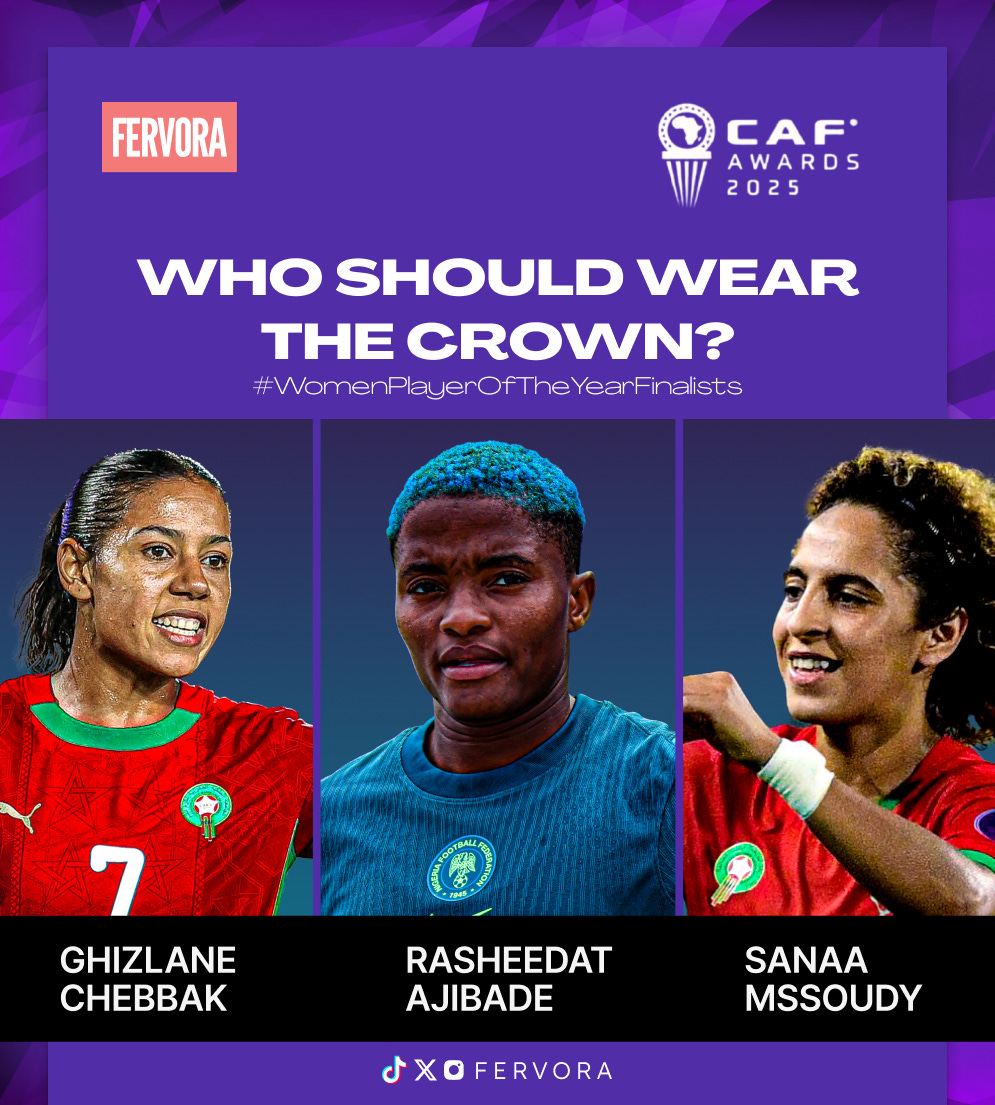
The release of the CAF Women’s Player of the Year 2025 shortlist has, as expected, reignited discussion across African football. Rasheedat Ajibade, Ghizlaine Chebbak, and Sanaa Mssoudy form the final trio competing for the continent’s highest individual honour. Yet, for many close observers of African women’s football, one name missing from that shortlist stands out just as emphatically as those that made it: Esther Okoronkwo.
Across the year in review, Okoronkwo’s performances for Nigeria and AFC Toronto delivered a level of impact and consistency that arguably positioned her among Africa’s best.
Her omission raises legitimate questions around the criteria shaping CAF’s final decisions and whether decisive international influence has been overshadowed by domestic accolades.
At the same time, with the shortlist now set, the debate over the eventual winner appears more straightforward: Rasheedat Ajibade enters this final stage as the strongest candidate to claim the award.
This article examines both realities, Okoronkwo’s overlooked case, and the clear merit behind Ajibade’s claim to Africa’s top crown.
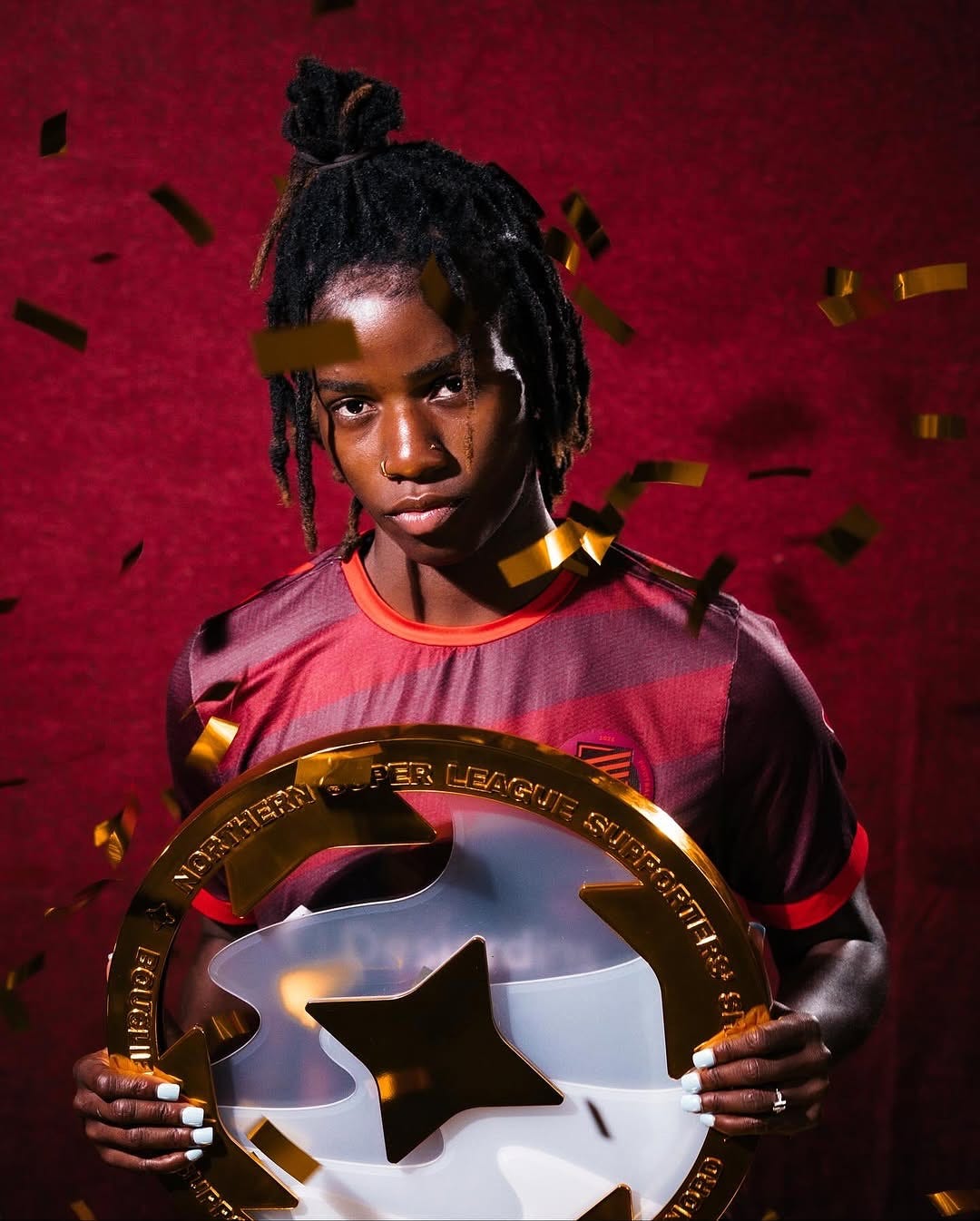
Okoronkwo’s Omission: A Decision That Warrants Closer Examination
Esther Okoronkwo has spent the past year evolving from a promising forward into one of Nigeria’s most reliable attacking outlets. Her contributions to the Super Falcons were instrumental and pivotal to Mission X. She brought directness, range of movement, and a constant threat in transition, qualities that became central to Nigeria’s offensive structure.
A Player Who Influenced Games at the Highest Level
In continental competition, particularly during critical WAFCON windows, Okoronkwo consistently offered value in decisive phases of play. Whether driving forward with purpose, stretching defensive lines, or providing tactical discipline in pressure situations, her presence altered the rhythm of matches.
CAF has historically prioritised players who influence outcomes in marquee tournaments. By that measure, Okoronkwo’s absence raises pertinent questions. Her performances carried a clarity of purpose that matched, and in some cases surpassed, the contributions of players who eventually made the shortlist.
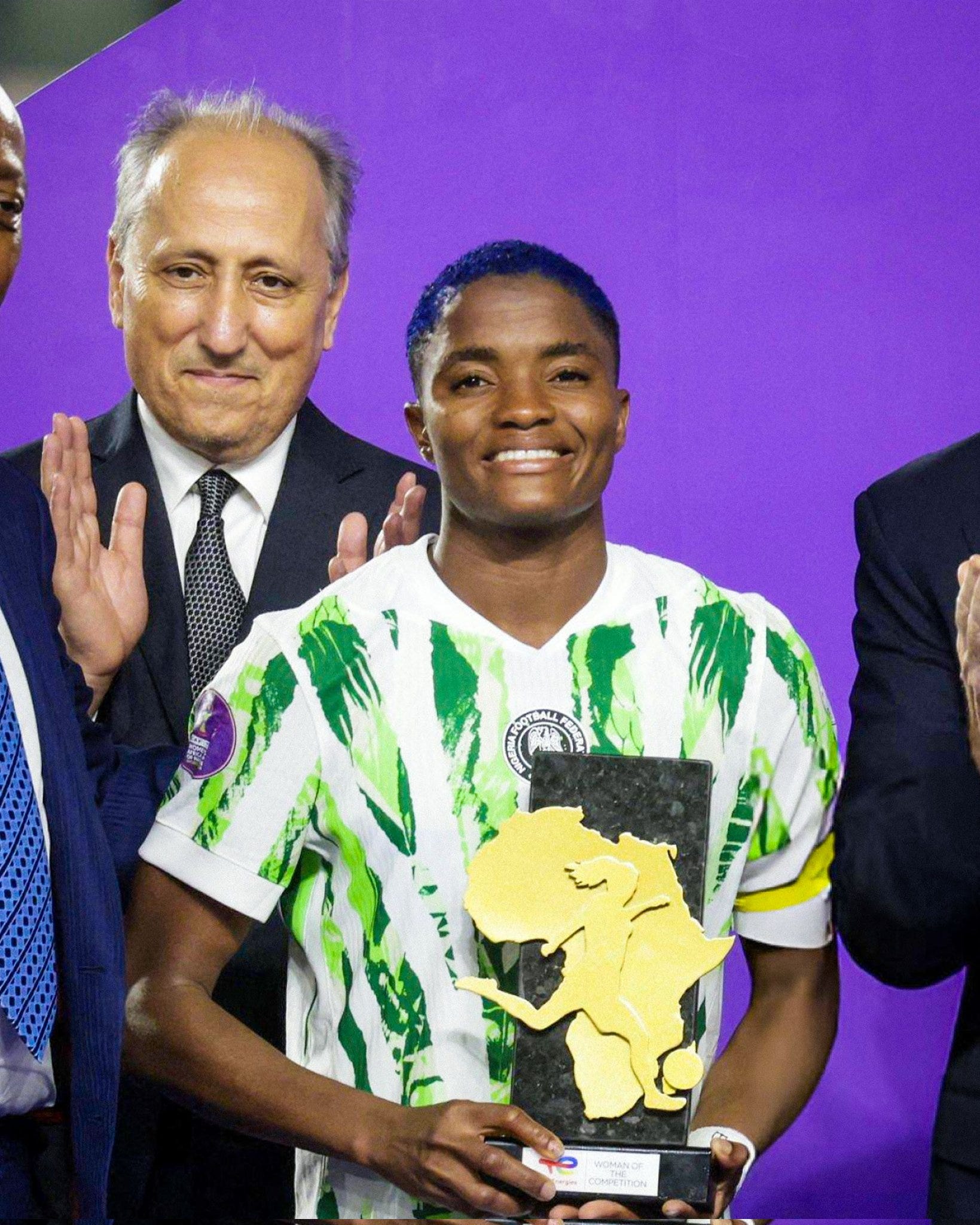
Why Ajibade Stands Ahead of the Final Three
With the shortlist established, the question shifts from who should have been included to who should emerge victorious. On the balance of evidence, Rasheedat Ajibade enters this final round as the most complete footballer among the finalists.
A Year of Significant Evolution
Ajibade’s development over the past year represents one of the most notable individual progressions in African women’s football. Long praised for her athleticism and flair, the Nigerian forward has added new dimensions to her game; improved decision-making, more controlled aggression in the final third, and an enhanced level of tactical maturity.
Playing for Paris Saint-Germain, one of Europe’s most demanding environments, she has sharpened her timing, spatial awareness, and adaptability. These refinements have directly translated into her performances for Nigeria, where she has emerged as both a leader and a technical reference point.
A Higher Competitive Standard
Context matters in comparative evaluation. Week in, week out, Ajibade competes at a level that remains unmatched by most African forwards. The speed, precision, and intensity of top-level European football have shaped her into a more rounded and reliable performer. This was obvious in most of the matches she played in WAFCON and it wasn’t surprising that she was awarded the player of the match in three out of six matches.
Neither Mssoudy nor Chebbak operate in leagues with comparable competitive depth. While both players excelled within their respective contexts, the breadth of Ajibade’s experience elevates her profile beyond the others.
A Consistent International Influence
For Nigeria, Ajibade’s contributions over the year have been consistent and decisive. She has become crucial in orchestrating attacking transitions, dictating pressing triggers, and setting the tempo in high-pressure moments. Her performances combined both individual brilliance and structural discipline are traits that define elite forwards.
Considering the full span of the year in review, Ajibade stands out as the finalist who maximised her influence across both club and country.
Conclusion: A Wider Reflection on Recognition
CAF’s awards play a significant role in shaping narratives around African women’s football. They highlight excellence, reward impact, and amplify the stories of players who elevate the game. This recognition must also reflect balance valuing both the brilliance delivered in domestic competitions and the decisive contributions made under the lights of continental tournaments.
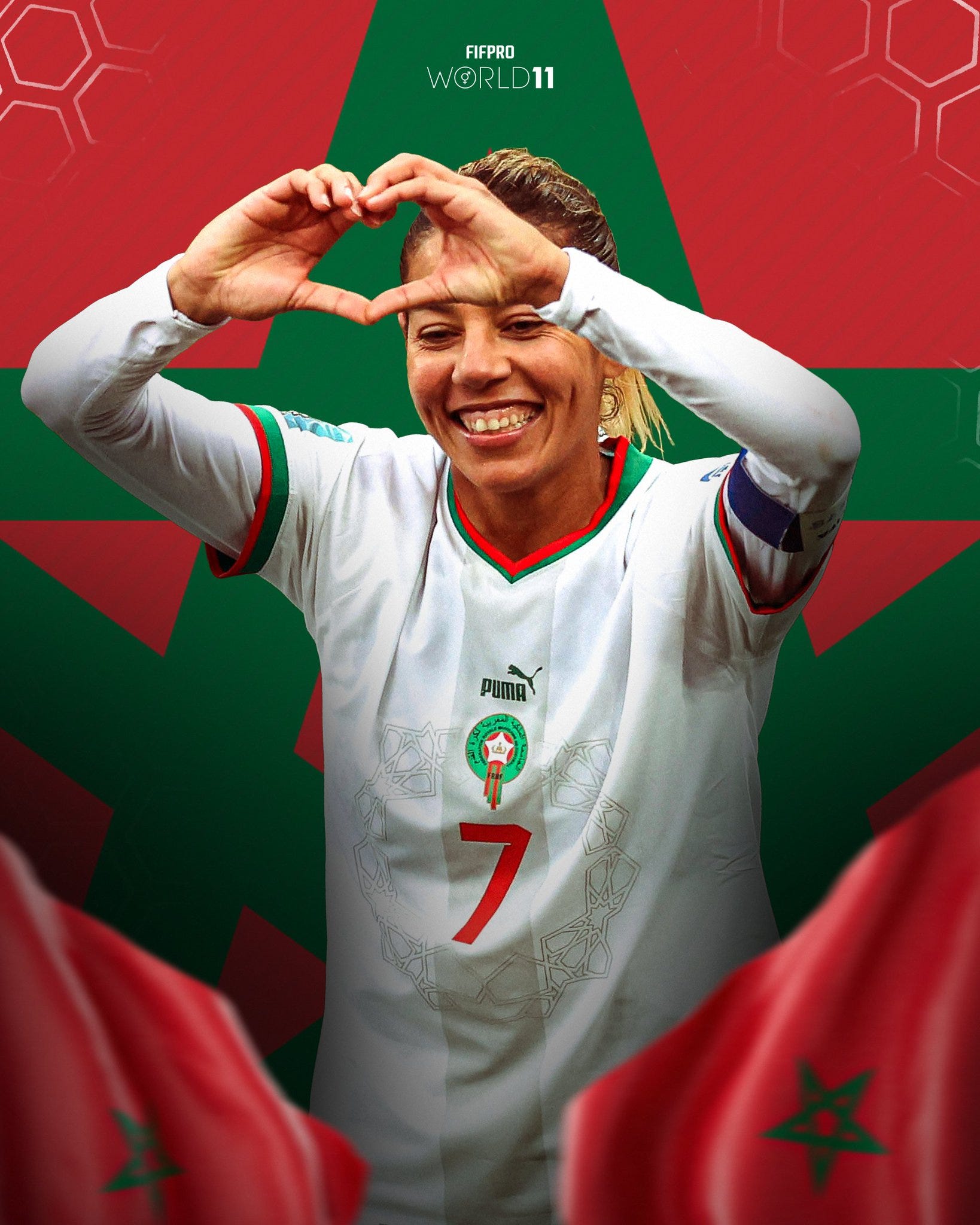
You could make a case for Chebbak and say she was the highest goalscorer in WAFCOn and the second African to be included in the FIFA World 11, but Esther Okoronkwo had the highest G/A contribution, won her league with a record breaking 10 goals and 13 assists in 25 games.
Esther Okoronkwo delivered the latter with clarity and consistency. Her absence from the shortlist is a genuine oversight, one that underscores the importance of examining criteria and ensuring merit is assessed across the full spectrum of elite competition.
As for the winner, Rasheedat Ajibade’s claim is the strongest and most comprehensive.
In a season defined by growth, resilience, and exceptional individual displays, it is Ajibade who stands above the rest , and it is Okoronkwo who deserved to stand beside her.
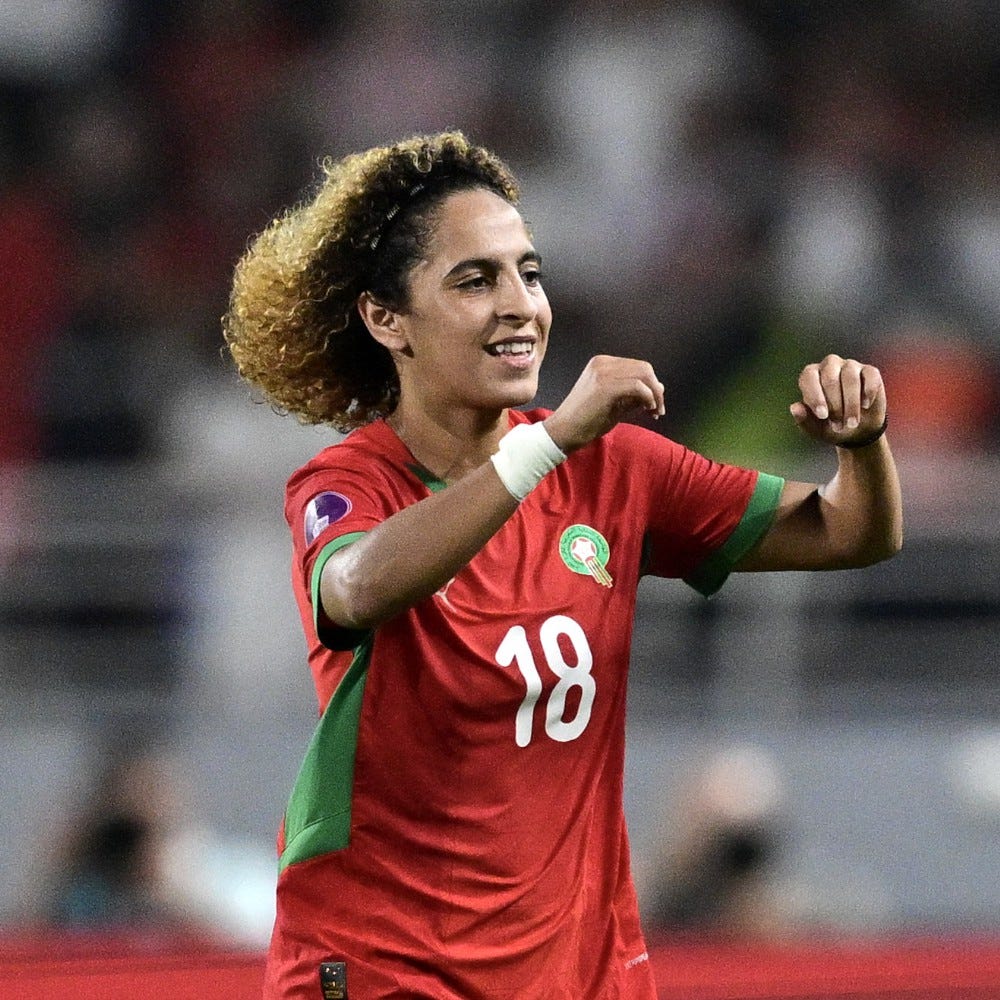
Bold predictions:
While Rasheedat Ajibade should be the clear winner tonight, from trends we won’t be surprised if Chebbak is rewarded with the award.
Who do think will win this award?
Share with us below
For me, CAF has omitted some of these key players and they have shown where their loyalties lie.